
Interview: LaTeresa Jones
December 7, 2009 ·
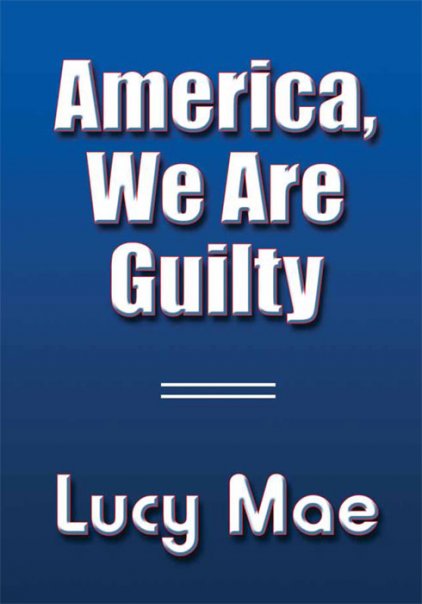
 Tell us a little bit about your work in progress and/or your upcoming release. My new book is called ‘America We Are Guilty’. It deals with our role in the great economic collapse, assuming responsibility and moving forward to change the world’s economic situation without prejudice.
Do you have an occupation in addition to being a writer? I owned a real-estate investment company.
What credentials establish you as an expert in your field or have contributed to your success as an author? My life experiences have made me an expert. My ancestors earned me the right, to being a born U.S. citizen, a registered voter, and the right to the 1st amendment. Those are my credentials.
About the Book
What was your motivation for writing this book? I was angry at a lot of circumstances in my life at the time. I was angry with America for mis-educating me all these years to believe success would be identified by the stuff I could purchase and the lifestyle I could create with that stuff. Then for America not to protect my family – since we’d played by the rules – I grew angry and discontent. I was not only angry, I was bitter with the sudden death of my favorite, eldest aunt Lucy Mae, and her husband. They were killed in an automotive accident in Detroit in 2007. They were hit by several youth who drove thru a stop sign on the eastside of Detroit. Of course, none of the youth were injured. I was devastated. She was my foundation while growing up on the eastside of Detroit. She soon became my motivation. My writing became therapeutic.
Tell us some of the factors that make your book unique. The writing is unique. I say what people are afraid to say. I speak the truth.
What is the single most important thing that readers of your book will be able to do after reading your book that they could not do before? Take responsibility for helping to make the change we want in this country.
Is there local or regional relevance for your book? The writing reflects deep humanitarian concerns. Hunger and homelessness broke, affects everyone.
What emotions does your book evoke from readers? Readers will feel angry, humble, and perhaps even cry a little. But the message should open their minds to the conversation of change.
Are there any controversial elements in your book? The writing attacks politicians, our thought, and our way of thinking. Not everyone deals with the truth in the same way.
In researching your book, did you come across any surprising facts, figures or statistics? The foreclosure market created the new homeless population. There are many middle class families that are now homeless. Also, I learned how much I enjoyed be an advocate thru my writing.
What one thing about writing do you wish other non-writers would understand? I want non-writers to understand that it’s a love to put pen to paper, but it’s a business after the book is published.
What are three things you wish you’d known before you reached where you are now? Networking with media prior to book release, and creating a business plan.
What would you like your readers to take away from your book? Capitalism is not about people, it’s about money. Be careful with making emotional purchasing decisions, not by what we see, but make them by what we need.
If you could change one thing you did during your road to publication, what would it be and what would you have done different? I wouldn’t change a thing in my life. All those things make me who I am today.
What advice would you give an aspiring author? Its easy to say “I want to write a book”, keep your thoughts on paper. Set dreams, goals, and write with heart.
Where can readers learn more about you and your books? www.publishedauthors.net
*****************************************************
Interview with Author/Educator Adra Young
December 3, 2009 ·
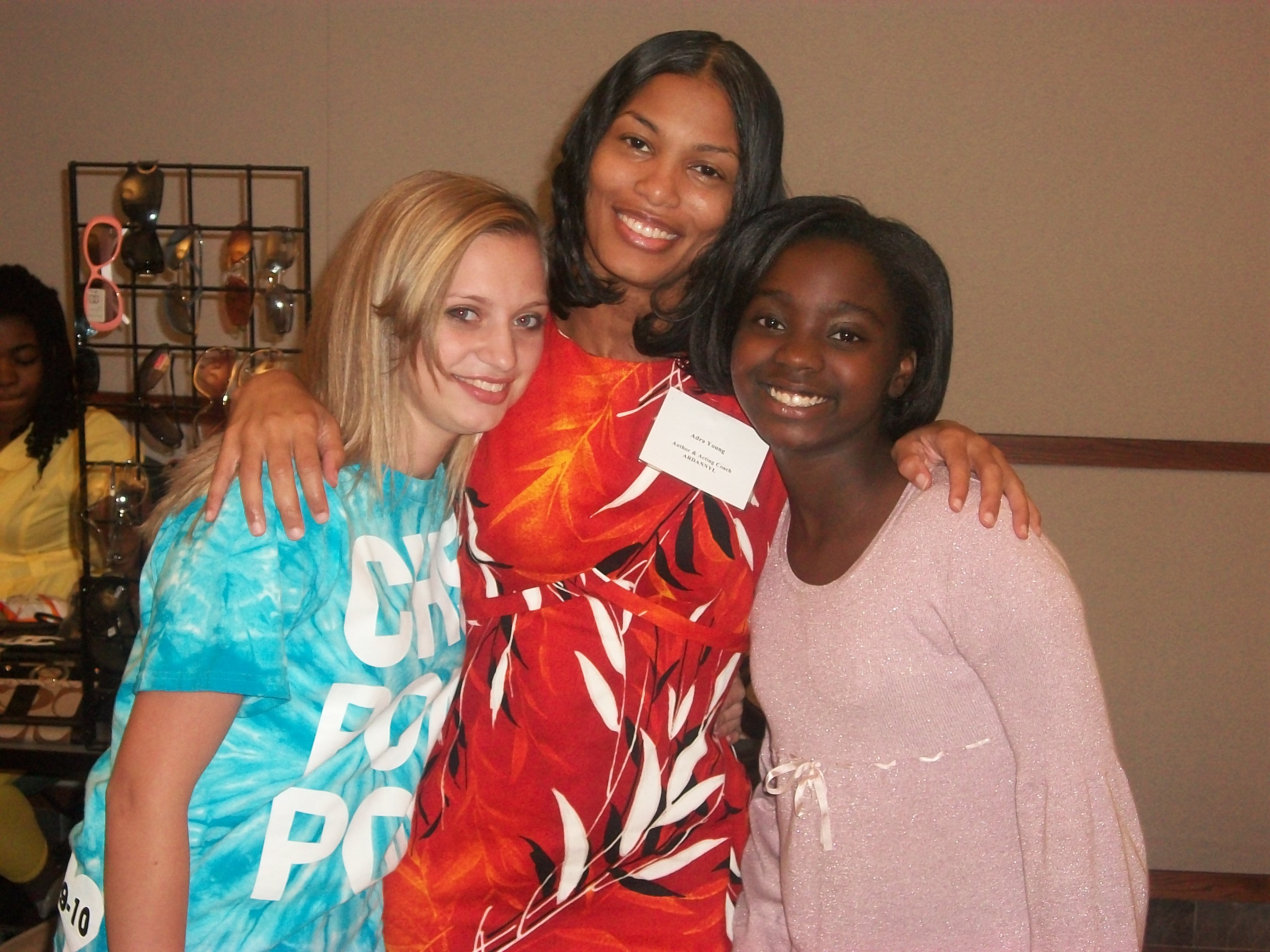
Adra Young At The 2009 You Are The Gift Conference For Girls
Tell us a little bit about you outside of being an author. I have taught school for approximately 14 years for the Detroit Public Schools System. I am also an actress, acting coach, and founder of Ardannyl, an afterschool program that provides acting to students five days per week.
Tell us a little bit about your work in progress and/or your upcoming release. My third book titled, The Misfits, will be released in November of 2010.
How many years of professional writing experience do you have? I have four years of professional writing.
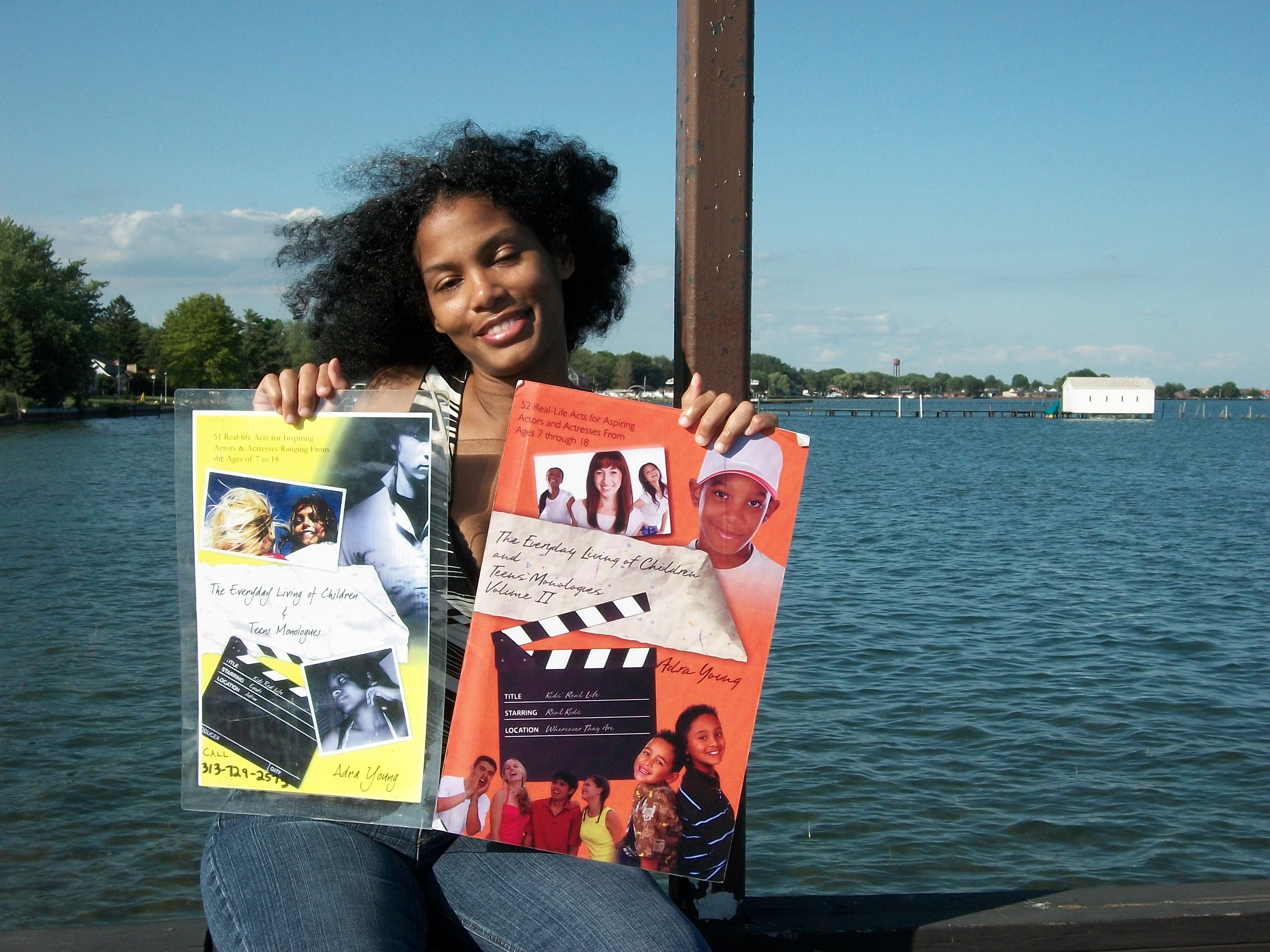
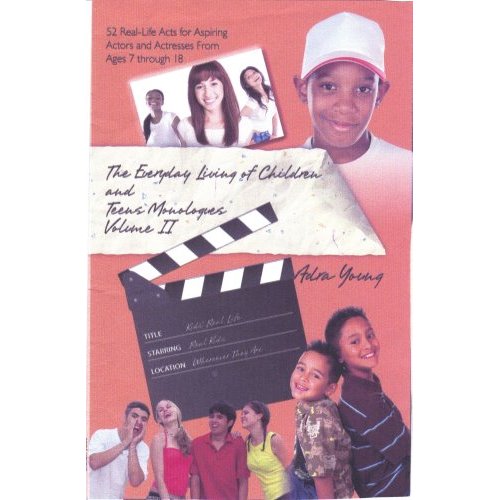
What have you written? I have written two books. My first book, The Everyday Living of Children & Teens Monologues, was published in 2005. In 2008, I published my second book, The Everyday Living of Children & Teens Monologues Volume II (a sequel to the first).
Do you have an occupation in addition to being a writer? I serve on the Board of Directors (along with my literary partner Tracie Christian) for the United Nations Association Detroit Chapter.
What credentials establish you as an expert in your field or have contributed to your success as an author? I have an M.A. degree in Education Administration, a B.A. in Education, with 14 years of teaching experience. My first play, “On the Scene Representing The Red, Black and Green” (a dedication to the Honorable Marcus Mosiah Garvey) was written in 2004. I have over 10 years of acting experience, and 7 years experience as an acting coach. I enjoy working with the youth outside of class room as well. I am a true advocate for the arts.
About the Book
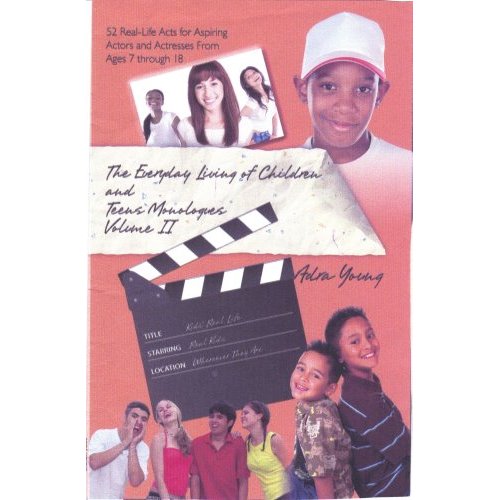
What was your motivation for writing this book? I was simply trying to make people aware of what is going on with our youth. I want the nation as a whole to observe the burdens and dilemmas that todays youth carry on their shoulders.
Tell us some of the factors that make your book unique. My books are both multi usage guides. They may be used for the improvement of both acting and appropriate socialization skills.
What is the single most important thing that readers of your book will be able to do after reading your book that they could not do before? I want readers to know that the majority of the time, when students act out inappropriately in a classroom setting, there is definitely something wrong occurring at home. For the most part, there is no such thing as a “bad kid”. Terrible things happen to children which in turn leads the child to act out and/or display negative behavior in the classroom.
Is there a local or regional relevance for your book? There is no specific local or regional relevance in regards to applying or utilizing my books. Nationally and world-wide, my books can and may be used in schools, churches, and performing arts facilities that place emphasis on training the youth on acting.
What emotions does your book evoke from readers? Empathy and compassion. I would like my readers as they indulge themselves in the various monologues from each of my literary guides to see behind the eyes of a child who simply faces too many multi faceted issues.
Are there any controversial elements in your book? There are no controversial elements in my book. As an educator, I simply wrote the truth about what I have observed with my students in my classroom.
In researching your book, did you come across any surprising facts, figures or statistics? Being a teacher now for over 14 years, I have just about seen it all. There’s not much that surprises me. I’m smacked with facts and the reality of educational norms and statistics on a regular basis.
If your book were for sale in a major bookstore, in what section would it be found? The Everyday Living of Children & Teens Monologues series would be found in the self help section, youth socialization, and acting and performing arts for teens.
What did you learn while writing this book? I learned that writing takes much applied effort and hard work.
What one thing about writing do you wish other non-writers would understand? I wish non-writers would respect the craft and talent of literary artist. We work just as hard as music producers, dancers, and actors, yet, the craft of writing is not respected on the same level as other forms and styles of creative expression.
What are three things you wish you’d known before you reached where you are?
-
The true meaning of a vintage press
-
The importance of continuous marketing
-
How to gain access to a seasoned author who could’ve served as my literary mentor.
How and why does your book differ from books of a similar topic?My books differ from most acting literary monologues guides because the “acts” are non-fiction.
What would you like your readers to take away from your book?
I just want readers to understand why so many children have so much built up anger inside of them.
If you could change one thing you did during your road to publication, what would it be and what would you have done different? I would not change anything. Many lessons – good and bad – were learned as I continue to strive towards the Best Sellers List.
What advice would you give an aspiring author? I would tell any new author to surround oneself with positive and like-minded individuals, and be aggressive and relentless in marketing ones product. Also, always remember to help, motivate, support, and encourage other artists.
Where can readers learn more about you and your books? Readers can log on to Amazon.com, Barnes & Noble.com, and Facebook. My web site is www.ardannyl.me
Please identify five recent books that compete most directly with yours.
- Great Monologues for young actors by Craig Slaight 2009 ISBN 1575254085
- Echo Booming Monologues by Mary Depner 2007 ISBN 1604025298
- 100 Monologues for Girls Mary Depner 2001 ISBN 1424344158
- Acting for young in Hollywood Frederick Levy ISBN 9780823089550
- 2000 The Ultimate Audition book for Teens for ISBN 9781575252360
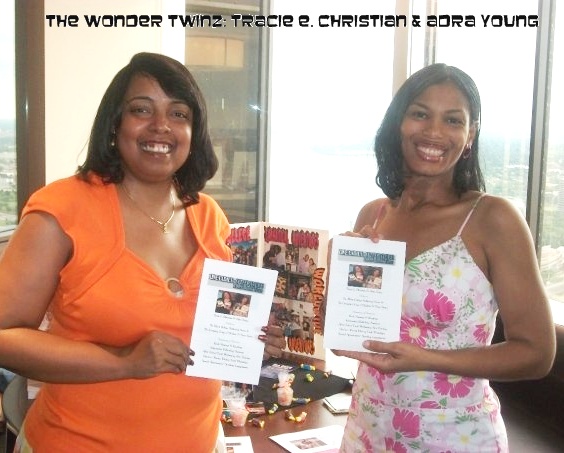
Literary Partners, Tracie E. Christian & Adra Young (The Wonder Twinz)
***********************************************************8
Jeremy Williams’ Detroit: The Black Bottom Community: Giving Voice to Stories, Histories, Ancestors and Living Life Makers, by Dr. Melise D. Huggins
November 16, 2009 ·
- Dr. Melise D. Huggins
It is important to note the poignancy of the term Black Bottom. It hosts an amalgamation of concepts, things and locations related to Black life in America. It is neighborhood enclaves, music, a dance; projects of struggle and displacement; a blog about African American politics, culture and activism; even cupcakes, cookies and biscuits. All terms, refer to some aspect of black life and living; the term even refers to a black derriere. I choose to identify for us that the black bottom relates to almost anything that describe black people, our richness, empowerment, collective history and memory. The black bottom is the source of all things good; from collective human lineage to soil.
Jeremy Williams’ book Black Bottom is about the same; a recollecting of the pieces of a life, the strings and threads that weave an identity: a story to tell. And this is the important work of storytellers, griots, local historians, chantuelles, citizens and dwellers: to resurrect our stories from obscurity; to right stereotypical images from lived realities and form them into multi-dimensional humanism. Historian, artist, writer, father, Detroit lived Jeremy, has Black Bottom as his origin, so this is a personal story. And what does this place in Detroit tell us about the corners of our lives and the places where we have lived, made a living and now, live, through time? We know our stories and lives have roots that are deeply connected to unknown places and spaces. Are we not called then to remember our pasts?
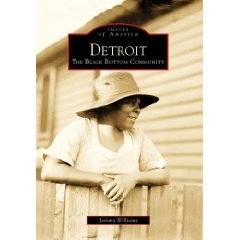
Available at ALL major bookstores, Amazon.com, and http://www.pushnevahda.com (click pic)
Detroit’s Black Bottom was a place home to American Indians, Rich Soil, European Immigrants, and African Americans. It tells of a dynamic history through time until World War I: from that history to current, do we know that despite the current downslide in Detroit Michigan such a culturally, ethnically rich community existed? The story tells us what and how much we did with little, and how women were called then to manage their homes and families; wife and mother was prostitute same. What has changed? How does that history contrast with current times where we have so much more, yet, our communities, like much of our history, are in dwindling and grave decline; doing less with more.
Williams’ Black Bottom begins a discussion of deconstruction. Should we allow it to, within us, it asks how did we march the dichotomy of our rich communities of the 30s and 40s to what we have now in the twenty-first century? And is that assessment to be contested?
Black Bottom is made for us as a community that survived for the people who lived there through their own limited resources in a period of Jim Crow, flourishing in spite of, and in the midst of racism and separation. Some thinkers raise the question of how integration disrupted the amassing of black wealth and was the destructive source of our inherent residential communities and Collectivity—where we owned our own businesses, lived together up, down and across social status; and enjoyed a bustling cultural heritage. Nothing then was needed outside ourselves and our communities.
From that period, we cross the bridge that was the wish of and for African American integration with white society and living; at what cost of what dereliction and community degeneration? Do we ask ourselves the reason and treason for the demise of such communities? Herein the reasons of telling our own stories; to know that what we see and experience today was not always what obtained, to lead us to the valley of self reflection and the possibility of and to change. Before that, to understand why and how things changed. And what is our current agency? Are we to reconstruct these communities? Can we return? There is much to ponder. And for that spur to excavation and thought, we thank Jeremy Williams for writing that journey road.
Dr. Melise D Huggins, Wednesday, November 04, 2009
→ Leave a CommentCategories: Uncategorized
Interview: Karen E. Dabney
November 1, 2009 · Leave a Comment
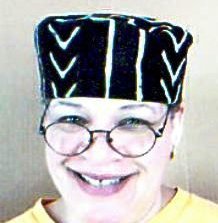 Tell us a little bit about you outside of being an author. I am a native Detroiter. I am a visual artist and freelance as an artist and writer.
Tell us a little bit about your work in progress and/or your upcoming release. I have several items in the works. I have a short story mystery that I am re-creating as screenplay and a book I wrote when I was fourteen that needs approximately 125 updated illustrations. I am constantly composing poetry and plan to publish a new collection in the near future. I am a contributing author in Cosmos 2010; an anthology. My latest release is my young adult novel, The Magic Pencil. It was published this past August and is an accomplishment of which I am extremely proud.
How many years of professional writing experience do you have? What have you written? I have been writing all of my life; beginning with telling stories through pictures. As I have done writing and editing for some time and am paid for such, I would guess I have been a professional writer since the early 80’s. I have written articles for newspapers, copy for advertising, ideas for comedy, and poetry, poetry. poetry!
Do you have an occupation in addition to being a writer? As stated earlier, I do freelance art and am attending school to get certified in digital and web design. Positions I have held in the past include teaching, project administrator and as a legal assistant.
What credentials establish you as an expert in your field or have contributed to your success as an author? I have two bachelor degrees in which my writing ability was a boon although neither degree is for English studies. I have been involved with youth in many capacities: as a teacher, re-creator, mentor and friend. I believe I possess great knowledge regarding how children think. I call myself a “big kid” because I am able to nurture and share my inner-child despite growing older. I have great empathy for children and the challenges they face.
About the Book

What was your motivation for writing this book? I began writing The Magic Pencil after noticing how important pencils are to children in school. They are considered as special as any other status symbol. This knowledge caused me to reflect upon my own experiences and I stated writing about them in the voice of an eleven-year-old boy. I wrote about ten pages in a small note book and didn’t pick it up for some time. It wasn’t until years later after I was accepted to a writing seminar that I found the note book. It was one of those times when one is guided to something forgotten based on what some may call divine intervention. I lengthened the writing to thirteen typewritten pages in preparation for my seminar. I felt the story had promise but I didn’t realize how much until the instructor, a well-renowned author, told me I would make a million dollars if I would turn those thirteen pages into about 120! I was so excited I managed to get the book to about 166, 8.5 x 11 pages.
Tell us some of the factors that make your book unique. I feel my novel is unique because it handles a plethora of challenges all youth face, while growing up in our world. Not only are these things presented; suggestions for how to navigate through them are supplied in an entertaining way. The characters are engaging and will cause the reader to want to know more about them and in order to do so s/he may be driven to a dictionary. I like to describe the book as “sneakily didactic” as many new things will be learned without being force fed. Also, Malcolm, the main character, uses black vernacular to tell the story but demonstrates he is fully conversant in standard American English. Another way The Magic Pencil is unique is that ages five and up will be able to enjoy it.
What is the single most important thing that readers of your book will be able to do after reading your book that they could not do before? I think the most important thing a reader will get from my novel is a new way of looking at the world and ways to meet its challenges.
Is there local or regional relevance for your book? I imagine the story as taking place in Detroit but I didn’t want to limit it to any one city. Its main setting is in a tough, urban neighborhood.
Are there any controversial elements in your book? Yes, many. Some of the topics dealt with are drug dependency, absent parents, sex education, truancy, blended families and methods of formal education.
In researching your book, did you come across any surprising facts, figures or statistics? Yes, I did. I had to do a lot of research regarding sports in which the average boy may be interested. However, I didn’t deal much with figures and statistics.
If your book were for sale in a major bookstore, in what section would it be found? I believe it would be found in the young adult section.
What did you learn while writing this book? How much I enjoyed getting up everyday to work on something I am passionate about. I enjoy the discipline that is required to write well and daily.
What one thing about writing do you wish other non-writers would understand? How much of ourselves we writers pour into our work.
What are three things you wish you’d known before you reached where you are now?
1. How to have gone about publishing a book at fourteen years old.
2. That I was born to be a writer; first and foremost.
3. How thrilling it is to see the effort I put into my story come to fruition.
How and why does your book differ from books of a similar topic? Because it teaches serious lessons in a lighthearted way.
What would you like your readers to take away from your book? I would hope the readers will experience the enjoyment and wonder I did while writing the novel.
If you could change one thing you did during your road to publication, what would it be and what would you have done different? I would have had more faith in having someone else edit the book.
What advice would you give an aspiring author? To just let whatever you care about flow onto the page. You can always clean it up later!
Where can readers learn more about you and your books? Visit http://dabsandcompany.com.
Please identify five recent books (with title and ISBN) that compete most directly with yours.
1. Letters From Black America Newkirk, Pamela ISBN: 0374101094
2. This Full House Wolff, Virginia Euwer ISBN: 9780061583056
3. Hustlin’ Divine, L. ISBN: 9780758231055
4. If I Grow Up Strasser, Todd ISBN: 1416925236
5. Dope Sick Myers, Walter Dean ISBN: 9780061214776
→ Leave a CommentCategories: Uncategorized
Interview: Jeremy Williams
October 7, 2009 · Leave a Comment
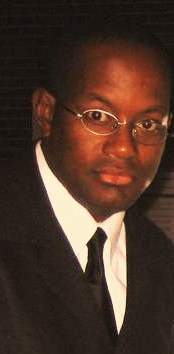 Tell us a little bit about your work in progress and/or your upcoming release. My new book is titled Detroit: The Black Bottom Community, and it is a pictorial chronology of a little known ethnic community that emerged during World War I, reached its zenith during World War II, and its demise during the national urban renewal movements of the 50s and 60s.
How many years of professional writing experience (if any) do you have? What have you written? Well, I wrote, produce, and directed plays during my high school days. But I guess you’re only a professional when you’re either published or paid for your material so I’ve been writing professionally for about 10 years on and off. I’ve written songs, music, plays, and … (continue)
→ Leave a CommentCategories: Uncategorized
Black History – Detroit: Black Bottom Community with Author Jeremy Williams
October 7, 2009 · Leave a Comment
→ Leave a CommentCategories: Uncategorized
Redefining Blackness: Perspectives from the Diaspora with International Scholar, Dr. Melise D. Huggins
October 1, 2009 · Leave a Comment

(Dr. Melise D. Huggins, International Scholar)
PNR: What is “post-race”? What does that mean? “
Dr. Huggins: Delusion, and the latest phrase of the news makers. It is a screen to the real issues. We still live in a very racial state of mind.
PNR: How do we enact racial justice?
Dr. Huggins: Racial justice, we are not there yet. We are at the stage of admitting narratives, their meanings, how they have been employed with power for some against others. We must get to a common base on this before we begin talking about how and what racial justice looks like.
PNR: How do we define and describe the parameters of blackness? What is “blackness”?
Dr. Huggins: Parameters of blackness? Wow, this is deep. There are people who are black that aren’t, and people who don’t look black, are. That is a subjective, personal fluid identity, and I prefer Black and Blackness to infer a state of consciousness, culture and context, as opposed to black, which is just color.
PNR: How do we create more solidarity with other marginalized communities?
Dr. Huggins: By recognizing the commonalities, and there are plenty. A big part of this is for these communities to realize that white supremacy and the American system of western domination pegs each against the other. This is so within Black peoples of the Caribbean, Africa and the U.S. It is so at another turn amongst Blacks and Latinos, and other groups, Indians from India, from Native Americas, etc., that needs to be acknowledged, teased out, contextualized, realized, and a coalition brought out to raise consciousness against it
PNR: Society creates a “post-racial” society” but what happens after this?
Dr. Huggins: That is not an agreed upon assessment is it? Listen, we need to understand how nuanced this thing is. Post racial can be said to be the state of accepting non-threatening, ivy-leagued, trained and instilled black people, who aren’t so black in programs, policies, ideologies and agendas. So is that Post Racial, really post racial when nigger people are still getting caught up in police dragnets on their front doors; and when people who are of all colors and stripes do not know their constitutional rights? (Hitchens, Jeffrey Wright, all wrote stories about the police after Gates.) Test a thesis to decide if it is true. Do not just accept what is spoon-fed.
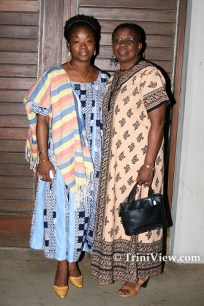
(Melise D. Huggins and her mother Marjorie Baptiste, Director of the Child Welfare League. Photo courtesy of TriniView.com)
PNR: Is blackness a cultural thing?
Dr. Huggins: Blackness is a color or appertaining to. Blackness is a culture; a transnational, trans-migrational frame, not restricted to just those of a certain hue’
PNR: What is race? What are racial constructions?
Dr. Huggins: Race is Human. Racial constructions have been Erected (pun intended) by white males of power for the purposes of divide, rule, conquer, subjugate, greed and wealth from places across the globe of people of color who were more inherently wealthy than they, Europeans, ever were in their places of origins. Racial constructions provided the means and justifications for the plundering that went on ever since they started travels to other and new worlds (Egypt, Africa, Americas, Polynesia, etc.).
PNR: Why is being/having nappy hair so negative?
Dr. Huggins: We have been taught to hate ourselves as part of the vast dynamics of racial constructions; a hierarchy of beauty, genetic preference, domination; a determination of who is doing the defining, writing, creating. But what few people know is that a nappy headed woman can create all others, but they cannot create us.
-Dr. Melise D. Huggins, is an international scholar writing on numerous issues including political economy, development economics, cultural ethnography, womanist issues, emerging economies and issues of change and transformation. She is a poet, artist, photographer and amazing chef.
Note: Questions generated by Bea Sullivan during 2009 Allied Media Conference held at Wayne State University
Next: Redefining Blackness: Perspectives from the Diaspora with Kenyan Poet, Sammy Kinadiali.
 what about the kennedys
We got you ma, You can use my site to promote… I’ve got over 1 million views already, and counting.
LikeLike
Thank God. I love You.
LikeLike
GOD IS GOOD… KNOWLEDGE IS POWER!
LikeLike