
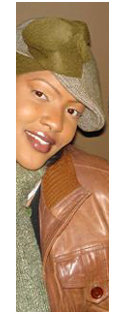
- Jana Sante
Push Nevahda Review: So, you like bell hooks?
Jana Sante: Indeed. Do you have any objections?
PNR: No, of course not. That would be sacrilegious. I saw her about five years ago at Michigan State University. She’s a perfect academic blend of sarcasm, charm, wit and brilliance, the ultimate academician.
PNR: You’ve got quite a few goodies on your book list.
JS: Yes, I had to dig deep to snag a couple of those, all in the name of a BA dissertation on sexuality, blues and womanhood in the work of Gayl Jones. It was a labor of love and quite an interesting task, too, I guess. But your summary of bell hooks, I agree with verbatim. The woman is just on another level and she’s mastered her fears with way more panache than the average functional intellectual.
PNR: Yes, I agree. She’s the only woman I’ll allow to give an opinion on manhood and masculinity, or at least the only one I’ll deeply consider.
JS: So, what’s your new book about? And I gather you regard bell’s voice as credible because unlike some of these other screaming feminist scribes, Ms. hooks has much more of an Oracle feel about her? I wonder. Who ranks supreme in your upper-echelon list of male scribes?
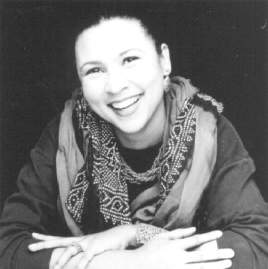
PNR: Denicio Barbier – the new book – is loosely based on a woman I met in Arizona. I’d gone out there to write my first book, get away from the existential meaninglessness of Detroit, find myself, and eat good Mexican food. For shelter, I took lodge on a Native American reservation for free rent in exchange for a promise of early morning rising to make community coffee, tend to the elders, and herd the sheep until late afternoon. Afterwards, I’d write and explore the vastness of land. Once every two weeks I’d drive into town – a three hour drive – to get supplies, water, and mail letters to the outside world. Also, I would sometimes drive to Ahwataukee for a beer, chicken wings, and the Carvin Jones blues band. That’s where I met Denicio, an attractive sista with a Brooklyn accent, who told me she was from the Hamptons. I didn’t believe her because she didn’t seem polished like that, and she didn’t have educated or sophisticated diction. She was very urban, chic, and more believably situated in the lower class bracket of Brooklyn or Harlem rather than upper-crust Hamptons. I really didn’t care because she had a great figure, nice ass, pretty mouth and a sexy accent. So, over the course of the summer I’d make it a habit of meeting her at that bar, and eventually at her apartment. In short, she was the most dynamic, exotic, and mysterious woman I’ve ever met. So, she is the basis of my story. Later I met more Denicio’s, and I begin to think of women, in terms of the things that connect them. As for my favorite male writers, I’d say James Baldwin, Edgar Poe, Cornel West, Chinua Achebe, Woody Allen, and Capote.
JS: So, you were on some black Kerouac-type expedition, eh? Pardon the comparison, actually Kerouac and his hedonistic Beat cronies irk me. Maybe in the back of my mind, there’s a smidgeon of anger/envy at that kind of flagrant white-boy mobility, maybe. But, your trip sounds remarkable. You surrendered yourself to the mercurial elements – very, very brave in many ways. The Indian reservation stay sounds intriguing to say the least, as does your muse, Ms. Denicio Barbier – of the faux-Hampton milieu. This issue of the making of identity is fascinating to me and I gather we share a similar appreciation for the dissections of social identities. I say this in response to your dramatic removal of yourself into a new state of isolated engagement, away from that existential meaninglessness. There’s so much profundity in that kind of deconstruction. I haven’t read any Capote. I guess I should. Interesting that Woody Allen’s in your categories of writer. So often screen writers don’t get their proper recognition as authors. Allen’s extremely anal retentive. His attention to cerebral interplay works effectively on screen though. I know black folk who lambast him for his color-free visualization of New York. But hey, he writes what he knows; be it insular or otherwise. Your reservation trip reminds me of Kerouac.

PNR: Well, unlike Kerouac, I’m not an in-the-closet homosexual, masquerading as a homophobe, while hanging out with notoriously flamboyant gay men, and writing about how I sucked Gore Vidal’s dick. And my mother doesn’t live with me.
JS: Your breakdown of Kerouac is funny! Well, living here in the hub of homo-erotica England, I’m perpetually left to raise a brow at the schizophrenic shifts in western literature between misogyny, homo-erotica and homophobia. As a female, most often I’m wearily bemused. So, what’s the title of your book?
PNR: Push Nevahda and the Vicious Circle: scenes from a random life.
JS: I suppose the Vicious Circle considers itself outside the popular ideology? I like antagonisms, as long as there’s a working point to the objection.
PNR: There is a working point, but you’d have to read the book. Also, I think the working point is in the title itself. That’s if one understands the point of Dorothy Parker and the Vicious Circle. I was trying to both pay homage to Dorothy Parker and the Vicious Circle, while suggesting a revision of a literary/counterculture movement. What a foolish notion, eh? Anyway, Parker – in her own cynical way – was very supportive of the Civil Rights Movement. She left her entire estate to Martin Luther King. The book was very experimental, bold, stream-of-consciousness (fancy expression for unedited), hasty, cocky, and out of the mainstream. Not very many people understood the point. You have a degree in American Literature, and even you didn’t get it. Shoot the messenger.
JS: Truthfully, the only part of Dottie Parker that rings a mental bell is the ballad penned by Prince. So I’m without solid references on that score, hence would not begin to offer detailed appraisal. Not that one was required nor solicited. But I am interested in counter-culture in a hypocritical but honest sort of way i.e. my longstanding gripe with Kerouac, the white-negro hipster phenomenon, and other instances in which elements close to my internal framework get pimped into obscurity. But, that stated, I do get the need for self-discovery beyond the pale. My American Lit background in retrospect is surprisingly sketchy. I was less interested in digesting the conventional classics and far more motivated to fuel my ravenous internal discourse on socio-cultural retentions of the Black Diaspora.
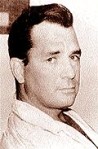
PNR: I never felt like Kerouac was trying to be a black hipster. I think Kerouac understood and appreciated the tragicomic circumstances under which black art was manifest – which is why he liked jazz, partly because of its improvisational spirit. And I actually think that he got the style idea for On The Road from the jazz artists – the improvisational, stream of consciousness, modernist kind of writing. He’d go to Harlem and watch the jazz musicians and get inspired by the improvisational style of playing. So, with On The Road, he was copying the jazz musician. That’s about as close to being black and hip as Kerouac wanted to be. Otherwise, if you understand his lifestyle nothing about Kerouac was imitative to/of black culture. If anything, Kerouac was really no different than any other iconoclastic writer who took issue with culture and society.
Jana Sante resides in London, England. She is a writer, editor, and designer and co-owner of Gisella Boutique
 what about the kennedys