

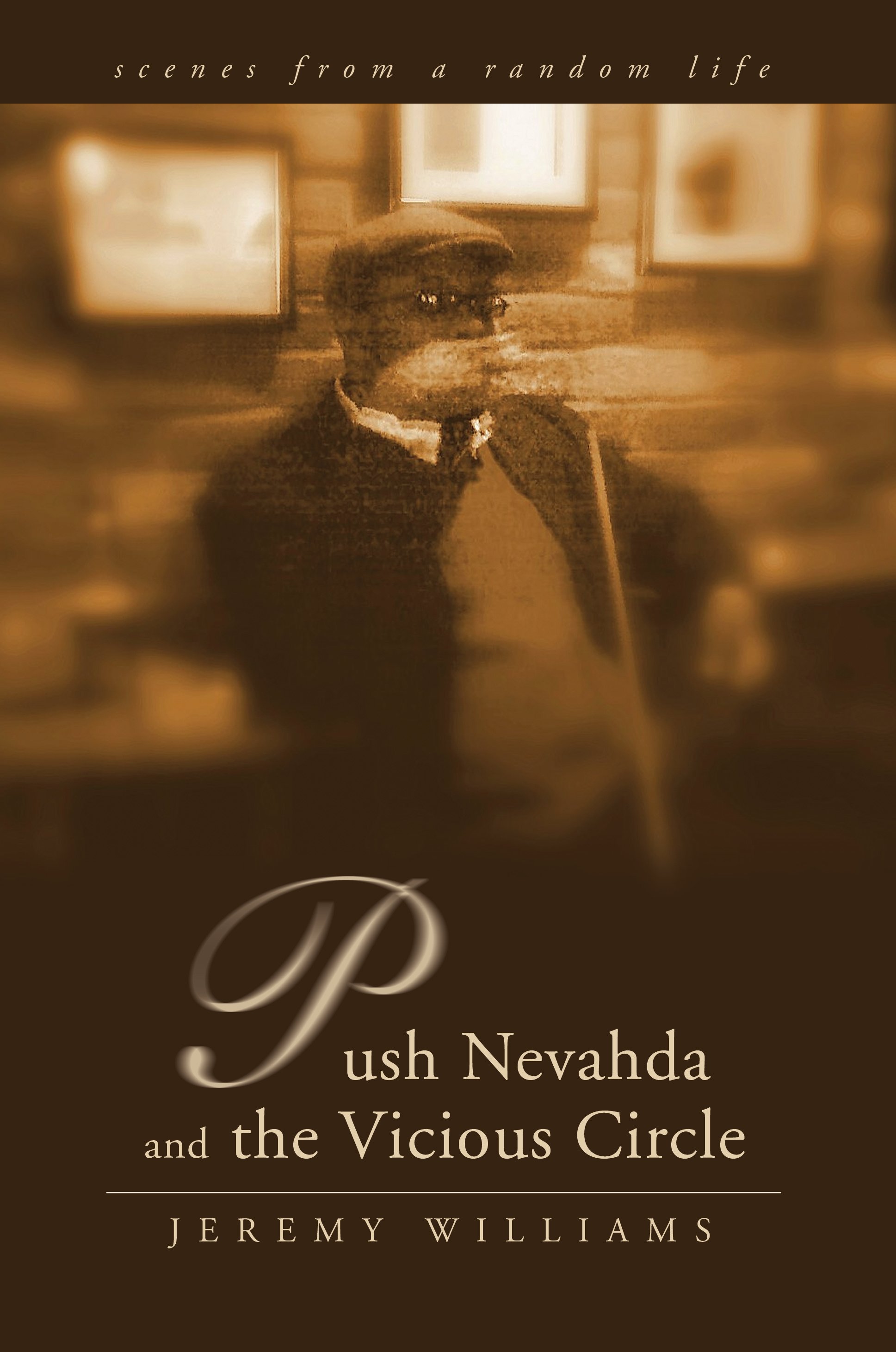
 If one would investigate whether a redemptive state can be found in author Jeremy Williams’ autobiographical novel, Push Nevahda and the Vicious Circle: scenes from a random life, it can perhaps be located in the confessional style and tone of the narrative itself.
Williams’ style provokes readers while influencing feelings of intimacy, connectivity, and a longing to save and find ways to participate in the redemption of Nevahda. The style alone forces the readers to see the need for redemption, given the abrasive, exploitative sexual promiscuity, or the recurrent childhood nightmares of molestation, while simultaneously trying to deal with the recent death of his mother.
The confessional is the space at which the sinner let’s go of his wrongdoings to liberate himself (almost like word vomit), ranting or releasing contents of one’s actions or reactions in ways that free man from himself while setting him away from them. But while the author pushes out the experience, we devour it and his redemption becomes our responsibility. In the case of Nevahda, finding redemption moves beyond the acts of sexual promiscuity or childhood molestation, for there is racial redemption that he is after, as well as religious redemption and religious deconstruction. For example:
And if there is a god- at least one who really is merciful one and truly loves black people-they why in the hell can’t black preachers preach on the importance of black self-love and tell sisters to stop wearing weaves and fake hair and shit like that? (68).
For these elements of self-hate and self-annihilation seem to bare a relationship to the violation of his innocence at the age of 5. Interestingly, this violation begins at the hands of a woman (his sister). Women play a vital role in this novel, and although they are as shiftless as Nevahda it appears they may be the only ones who can set him free or redeem him from the haunting of this vicious life. For God is not the saver or redeemer here, neither is he redemption itself.
For Nevahda, God cannot exist: “how sick and demented can you be to watch such tyranny, madness, and human suffering, claiming to have the power to end it all, but do nothing?” (67). Perhaps if the God who exists, to which redemption can be given was real then Nevahda might have never come to know “a vicious life”.
In the end the Vicious Circle represents like God, life and death, good and evil, pain and laughter, yet it seems death, evil and pain tend to overtly engulf the novel, when one looks close enough you’ll find that the text alone is redemptive, or by far one step in the lifelong process of redeeming oneself.

 what about the kennedys