

 “A woman is a nobody. A wife is everything.” – Elizabeth Cady Stanton, Women’s Rights Convention, Seneca Falls, New York
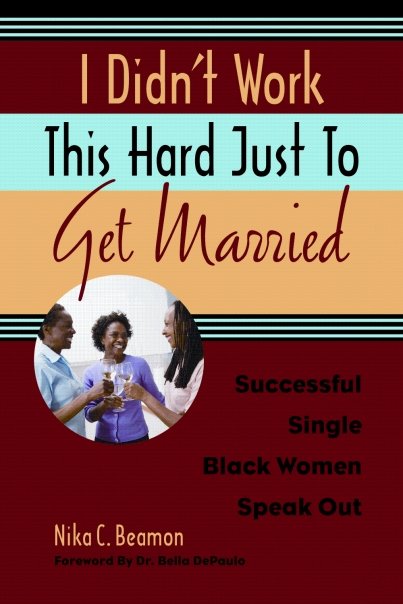
Nika Beamon’s new release, I Didn’t Work This Hard Just To Get Married, is an ambitious collection of personal stories from a carefully selected group of professional women who discuss what it means to be successful, black, single, and happy. I enjoyed this book because it is practical and easy to read. Yet, no book is perfect and Beamon’s book is no exception to the rule. From the book’s suggestive title to the particularly interesting socio-economic class from which Beamon chose her subjects, this book perhaps sheds light on an even deeper matter percolating within this selective group of bachelorettes than they may realize.
At first glance, Beamon’s book attempts to dispel the popular beliefs that Black single women are unhappy, miserable and lonely. A few chapters into the book, we are almost convinced that these women are indeed happy being single, have no regrets about sacrificing love and relationships over marriage, and are in fact “alone, but not lonely.” Yet, a few more chapters into the read we begin to see the plights of these women in a different way, and by the time we get to Nancey Flower’s testimony, we arrive at a more realistic insight on the issue of the successfully single and contented Black woman. In this lengthy passage, Flowers keeps it real:
“Who doesn’t want to be loved? Have a steady companion for trips, dates, and to lie around the house with. Dream big with, share fantasies with, raise a family with. Grow old with, laugh with, cry with, share a meal with – and split the mortgage with. “
We don’t expect this kind of real talk that would seem to go against the program of a book like I Didn’t Work This Hard Just To Get Married. But, true to heart, Flowers reveals a deeper social/psychological/economic dilemma with the notion that a woman can do without a man:
“While we’re busy smashing the glass ceiling and blazing trails, we leave our children to be raised by misogynistic programming, biased media, ignorant and misinformed people on the streets, and individuals who just don’t have the best intentions for our future. We can’t do everything, at least it’s not the natural order of things.”
One of Beamon’s interviewees goes so far as to play the Jesus bag, suggesting that being single is perhaps her holy destiny. In the chapter “Divinely Single” Jersey City entrepreneur Camille Young believes that “God had a different plan for her future,” and that “If it is my destiny to get married, I will. If I don’t, then it is not because I traded that path in.” In other words, Young is OK with being alone “because God had a different plan for her future, one that will allow her never to be lonely because she has His love.” (Or something like that.)
Yet, this contradicts or at least challenges the notion that God made us for the purpose of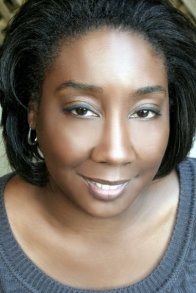 procreating and filling the planet with more human life. The animals do it, the plants do it, and we’re supposed to be doing it as well. In other words, the popular belief is that God gave women a uterus and a womb and a vagina and all that other stuff for the sole reason of having babies. If Young’s divine destiny is one other than that of a mother – a bearer of children, then she must not have been born with a uterus. Matter-of-fact, she shouldn’t even have a vagina if we’re really supposed to buy the divine destiny theory. What would be the point in her having one? (But, then again, Beamon’s book is shotthrough with contradictions as such – women who’ve danced with the devil, but can’t do the Tango.)
However, I certainly appreciated the insightful foreword by Dr. Bella DePaulo, (and the back-flap praise by renowned scholar Dr. Julianne Malveaux), but I also would’ve been really impressed if Beamon could’ve wrestled with the well-documented perspectives of bell hooks, Nikki Giovanni, Beretta E. Smith-Shomade, Michael Eric Dyson, Iyanla Vanzant, or any of the other noted scholars on the topic of Black women, Black love and Black relationships. Instead, Beamon relies on general stories that yield general conclusions, ultimately leaving us with no serious food-for-thought, only reinforcing age-old stereotypes and tired clichés.
For example, after reading the chapter, “Not All Black Women Are Angry,” one gets the feeling that black successful women are unable to find good black men because they are in jail, uneducated, lack ambition, have no goals, and/or are gay. Bullshit. In other words, all of the blame for the Single-Black-Successful-Sista-Syndrome is placed squarely on the backs of black men. But, then again, nothing sells better than the classic, age old tale of the uneducated, irresponsible, shiftless, brotha who can’t seem to measure up to the strong, progressive, educated, sista. None of the women interviewed seemed likely to submit to the possibility of a little self-examination. Even though these beautiful women are certainly (fiscally) attractive, educated, and available, yet, perhaps they are simply not the kind of women that men would even want to date.
Perhaps Beamon should’ve interviewed some brothas for this book! In doing this, she – and her colleagues – could’ve learned some things about the dating scene, Black men, and themselves as well. Single, educated, brothas (I simply don’t by into the notion that there aren’t any of these types available) are just as selective in the dating process. And at the mature stage of a man’s life he isn’t really interested in a wife, especially if he’s divorced or has had experience with long-term relationships. And if he’s a healthy, financially sound, and securely single he’s more likely to play the field, enjoy his hard-earned success, and…pick succulent fruit from bountiful trees (according to the ration of men to women, pussy is so plentiful it’s growing on trees). This is why Beamon couldn’t understand why rich, single, playboy Puffy never settled down with the mother of his children, instead, prefering to remain aloof, unattached, on the playing fields. Crassly put, there’s simply too much ass for a financially successful man (white or black) to have, as opposed to settling for just one. (Quite frankly, it’s inhumane. The Muslims and the Mormons understand this complex male dilemma. But that’s another story. One that women won’t be ready for, or simply won’t want to understand for another 4 billion years.) Yet, we see none of this kind of spiritual wrestling or deep sea diving from Beamon’s and her vicious circle. Instead, they reveled in their degrees, accomplishments, homes, big bank accounts, and jet-set lifestyles, while blaming their empty love lives on unqualified, uneducated, and unambitious black men.
 Whatever the case, no book is perfect (except for Ayaan Hirsi Ali’s recent memoir, Infidel), and, other than a few minor flaws, I enjoyed Beamon’s book tremendously. Her writing is good and the book is so engaging I couldn’t put it down, turning the pages faster than a spinning wheel. I spent the best of a late, breezy, afternoon finishing it, then invited friends over for evening cocktails, wing dings, and some last minute conversation on the topic of single women, marriage, and Beamon’s book. We discussed its importance and relevance, and everyone shared their overall first impressions. Laurel, a bartender whose girlfriend recently left him because he wouldn’t marry her after 8 years of shacking together, finished the book a week earlier and cynically responded, “I thought the book was about a group of old, tired and resentful women who’ve not yet reconciled the issue of getting old and being alone.” Leyton, a 46 year old Native American who recently retired from an Indian Reservation School district, said “I understood their stories very much so. I gave up marriage and children to pursue an education and a career. Now, I’m retired, single, no children, and no one to share my life with. Sure I have friends but not a man. I’d rather spend time with a man, being in love and all that stuff. [She laughs] But I see nothing wrong with any of their decisions to pursue whatever lifestyle that made them happy. The key though is to accept the choices you’ve made. And at times while I was reading the book I got the impression that some of these women – not all – but some may be a little resentful. Some of their stories contradicted, I think, the point that the writer was trying to make, or the overall point and focus of the book.”
Like any book of this nature, I Didn’t Work This Hard Just To Get Married certainly has its contradicting moments. Maybe that speaks more to our flawed humanity, elitist conceptions, bourgeoisie sensibilities, our fear of seeming weak and vulnerable, and the fact that we really don’t know how to accept (or admit) when we have made mistakes in our lives (e.g. “I shoulda married ole Willie when I had the chance.”) Perhaps, as author Deborah Gregory has suggested, “Black women have settled. I see a lot of settling going on on women’s parts, putting up with things that they wouldn’t if there was more of a pool to draw from.”
So…what’s really going on here? Is the book’s message lost in the very testimonials it relies on to keep it afloat? In the end, as these stories demonstrate, they all want and desire men in their lives. That really seems to be the case with these women. It’s not about being happy alone or lonely. They all want a man. They made the choice to chase careers over marriage, and are now haunted by the ghosts of past possibilities. Sort of like someone who has an abortion, then spends the rest of her life wondering what the child might’ve become. Whatever the case these women aren’t really anti-marriage (as the title suggests). They have simply learned to cope with being single.
PUSH SCALE: 8 out of 10
 what about the kennedys