
(Note: This book list is about me, first. The list isn’t about books published the year of 2011, but morseo about those books which have deeply influenced me, my life, my way of being, thinking, perceiving, and the way in which I process the world around me.)
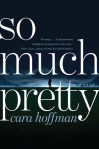
1. Cara Hoffman, So Much Pretty: (Posting soon: review of So Much Pretty at The Hollins Critic Literary Journal)
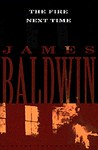
2. James Baldwin, The Fire Next Time (a re-read): James Baldwin’s furious essays always reveal a sense of community, contemporary insights on race, and the pervading matter (or question) of fraternal love. At the center of Baldwin’s essays are Christian themes and intransigent messages of biblical import couched in religious language, baroque prose and vivid imagery. Racial identity and Christianity are always prevalent in Baldwin’s essay, with the author’s relentless examination of human compassion, racial justice, and moral crisis. Baldwin’s writing juxtapositions ministerial styles of the black Baptist church and Christian faith and hope as a moral compass to gauge humanity’s possibility for redemption so that the world may be healed and saved from imminent self-destruction. These are major themes and motifs in Baldwin’s work, our own morality and decency and propensity to love above all else. Although Baldwin eventually left the church, the church never left him. Christian messages of morality and redemption have remained a recurring motif in most of Baldwin’s work…. click here for review: James Baldwin, The Fire Next Time
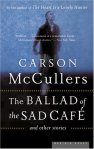
3. Carson McCullers, The Ballad of the Sad Café: The novel is set in an isolated town in a small rural area. From the novel’s vivid beginning we get a sense of the time and place through the narrator’s panoramic portrait of “an extraordinary atmosphere….the heat, the slowness…the south,” and McCullers sets the tone for the loneliness and isolation to come, creating a poetic and lyrical probing of isolation, loneliness, gender…. click here for review: Carson McCullers, The Ballad of the Sad Cafe
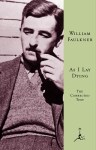
4. William Faulkner, As I Lay Dying: I finished Faulkner’s As I Lay Dying with a great amount of relief. I have many concerns about his description and treatment of 1930 southern context and rural white folk, even the dialect. I was not satisfied with what is supposed to be one of his great philosophic novels. (Mostly because Faulkner, in this novel, is socially blind, culturally senseless, politically paralytic – like T. More with Utopia. I now understand the advantages of the fition genre: cunning unaccountability). But then I started a Baldwin novel (like a sinner at a church revival), and it felt like tall cool drink after a long sub saharan thirst.
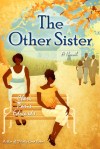
9. Cheri Paris Edwards, The Other Sister: I believe that novels have the mystical ability to enter our lives at a moment in which we find ourselves standing at the crossroads in-search of something that change our hearts and minds in effort to teach us a deeper meaning of life and love and purpose. Perhaps this is the point for me of Cheri Paris Edwards latest novel: The Other Sister….click here for PNR review
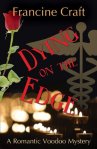
10. Francine Craft, Dying on the Edge: Loverboy couldn’t keep his hands off of Dirty Diana. She looked 45 years old, sun-bleached blond, modest tits slightly exposed under a soft blue cashmere button-up resting over her arms and shoulders, snuggled, caressing her feminine mystique. She finally looked up at me, smiling as though she were concealing some forbidden secret. She had nice teeth, great smile, slender hips, polished toes, French manicure, and young-girl legs with cool zippers on her jeans. Her purple leotard top had a gaudy broach resting at the middle of her supple cleavage, and she flashed me a wicked smile when I turned to sit next to her. She looked like a young Nancy Sinatra, I thought to myself, noticing a bottle of water, a cup of oatmeal bran, and a Home Journal magazine resting on her lap. She had nice poise – not a Sophisticated Lady, though – and I could certainly see why he was infatuated with her. He held on to her tightly, so affectionate and tender and loving, as though he did not want to lose her for anything in the world. This woman did not seem to be his wife. He wore an expensive wedding ring, her wedding finger was bare. I smiled at the obviousness of their secret love affair, and I wondered if his wife would be waiting for him at Detroit Metropolitan Airport. Perhaps there would be children too. Daddy, daddy! Welcome home! I took my seat beside Romeo and Juliet, read last-minute texts, set my music, and pulled out my latest review copy of Francine Craft’s Dying On The Edge….click here for PNR review
 what about the kennedys