
 I reached into my briefcase looking for my half full bottle of Christian Brothers VS brandy hoping I’d have enough left to get my head straight and my mind right to make it through the rest of this night. “Damn. Only a quarter full, and my flask is empty. Shit, I gotta get up outta here,” I thought to myself, still crunched down between the queen-sized bed and the bean-bag chair positioned near the left end of the cluttered bedroom of my new girlfriend Denicio Barbier. “I’m going outside to smoke, babe,” I yelled to Denicio who was out in the front room area entertaining guests. Her apartment is small, junky, filthy, and littered with the random stuff of things besetting any graduate student’s apartment. Denicio had invited some of her cohorts from the English Department over for lasagna, salad, and apple juice, and had expected me to sit among these people and join in a discussion which I found to be totally irrelevant to what was going on down in the very communities for which this institution had been purposefully erected to serve. I stuffed my brandy into my favorite corduroy blazer, walked into the small kitchen area, and leaned up against the dirty sink to look at the great pretenders from a distance, hoping that they wouldn’t notice my condescending grin. Denicio – always willing to parade me to her friends the way one would proudly show off a new dog or cat – asked, “Babe, what do you think?” I snapped out of my daze and tried hard to appear as though I gave a fat rat’s ass about the uninformed discussion this phony group of elitist-wannabes were having. I took a big gulp of my spiked apple juice and situated the question once again: “How do I feel about the rise of Urban Lit and what does it mean to African-American literary contributions as a whole?” “Yes!” said Katherine, a pedantic doctoral student who’d bragged on endlessly about her dissertation on Jack Keroauc’s rejection of the Beat Generation (the very movement he and Ginsberg started).
 Denicio frowned when I took a Black-n-Mild cigar from my inner coat pocket, slowly peeled the wrapper off, put it in my mouth, lit it, dragged, inhaled, and blew heavy, thick, billowy smoke rings before answering, “Well,” I thought aloud, picking tobacco residue from the tip of my tongue, “as a writer, myself, it’s not really my job to even have these types of discussions. My job is to simply write. Now, your job, as….academicians, is to study the writer. So, that, to me, would make the writer much more powerful than one whose job is to try to make sense of the writer’s work by trying to analyze the writer…trying to get inside the mind of the creator. But, anyway, babe, I’m gonna go outside and smoke this spliff.” “Excuse me,” Denicio said to her guest then followed me outside into the cold. “Uh, babe, why must you smoke those things?” She giggled a little to ease the tension and stress of the question, to control my temper and the force of my response. But I had no interest in an argument with her. Besides, she’d just gotten off her period and I didn’t want to ruin a good night’s fuck over a frivolous argument. “What things, babe?” “Those Black-n-Mild things you’re smoking now, babe! They’re so ghetto!” She laughed as I took a long puff and walked off into the dry, cold, dark night, headed towards the intersection of Crescent Lane and Harrison to find a campus commuter bus going in the direction of the Post Bar, or in any direction that would get me to any establishment serving any concoction that might resemble a sweet French Martini.
The bus ride to Michigan Avenue was quiet and slow. I thought about the conversation I’d had with Arnold’s disinterested aliens, and what it meant to the current crisis on the direction of Urban Lit. (Is Nick Chiles right?) I took a long deep sigh, slumped back, crossed my legs, and rested my worried and weary body while the bus pushed on towards the intersection of Mansfield and Michigan, across from Berkey Hall, in the general vicinity of the Post Bar & Grill. I thought about the burden of reviewing I’m Coming For Yah, by Robin L. Anderson, and whether or not Chiles’ erudite article had been more so prophesy as opposed to urban lit author Jihad’s rebuttal that Chiles is “shooting arrows at what could very well be the beginning of a cultural reading revolution.”
Quite frankly, I neither liked nor disliked Anderson’s gritty street tale about a ruthless crime-boss named Bronze and his criminal enterprise called Killers In Action. But, no need to waste precious space with vivid and colorful descriptions of just how dangerous this raucous bunch of usual suspects could be because we already know the deal: young, ruthless, career-criminals possessed of an insatiable appetite for totin’ gats, selling dope, and smokin’ fools….they just be killin’ mutha-fuckas. And from the beginning, Anderson packs this crooked gangster manual with 292 pages of gratuitous murder, senseless violence, cartel greed, and cold-blooded homicide. This opening scene sets the tone for the rest of the novel:
“Oh it’s like that? You shooting at people and shit? You got five seconds to say your last prayers. Yo, open up this suckers chest cavity and pack it wit these rats. Here put that shit in this box. Take that block of cheese and stuff it in his funky ass mouth and leave him here. Only thing I want from him is his feet and his heart. Bring them both to me in containers.”
“Can I have an Apple Martini, please? And bring it to the back table,” I instructed the young pretty waitress, while  handing her my credit card before turning to find a quaint, quiet booth in the rear of the bar, one that would give a panoramic view of the supple asses and slinky hips bumping and grinding to the late, great, ghetto philosophy of Notorious B.I.G.
Anderson’s book forced me to think about the shaky state of black literature and how I (as a book reviewer, critic, and author) fit into the scheme of the increasingly controversial dialogue. It is my contention that there has been a wellspring of good literature produced by the black literary front even since the dubious decade of the 70s, including Baldwin, Gayl Jones, Morrison, Octavia Butler, Baraka, Wendy Coakley-Thompson, Bebe Campbell, Stanley Crouch, Freedom Speaks and so on, but this new millennium of emerging writers and novelists are still struggling to find a place in contemporary literary circles. And, so, here I am sitting at a strange bar trying to forcefully build a plausible response to a situation which neither titillated nor challenged my intellect beyond the mid-point of trying to figure out why I even bother with mediocre reading at this point in my life. Four ink-riddled napkins of a struggling draft lay on the table like a jig-saw puzzle. Where’s the reward? Perhaps Joey Pinckney is right to note the rationality of paid book reviews. I love reading and reviewing books, and I want to do my part in supporting the new renaissance movement (which I believe to be) taking place at this very moment in black America. But the sacrifice has become unbearable.
S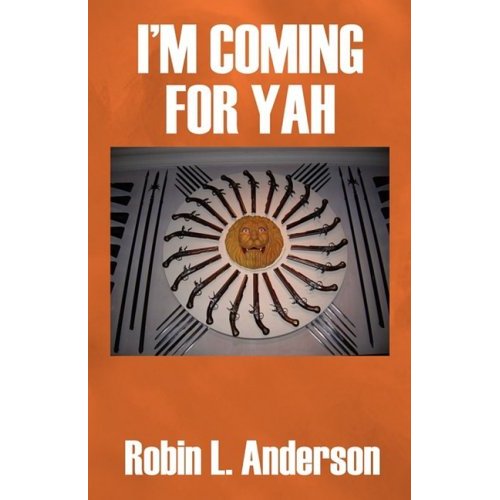 o, for the sake of fairness, Anderson’s new book, I’m Coming For Yah is [interrupt] “Excuse me, young lady, bring me a French Martini, please!” Ok…where was I? Oh yeah. The first issue I have with Anderson’s book – which ultimately becomes the main issue…which ultimately cripples the book…which ultimately forbids us from taking the book seriously, is the tragically bad editing. Bad editing can ruin even the best intentions of the most promising novelist. And this is partly the reason so many (Urban/Street) novels fail to reach a broader market and/or make it to the big times. Bad editing. On that note, it is sometimes difficult to move through the book for notice of these major editing flaws, unnecessary errors, bad grammar, and inconsistent language usage (colloquial or otherwise). It is even difficult to follow the story due to the book is horribly constructed. As much as I tried to find an angle with which to ride this book through and find some redeeming quality I just could not do it.
Push scale: 2/5
- Karen Dabney, Push Nevahda, Versandra Kennebrew, Janaya Black
Artists are supposed to see the beauty in the ugly…make the ugly beautiful….fix the deformed…and make people see the looming sun amidst the violent storm.
 what about the kennedys
Not bad article, but I really miss that you didn’t express your opinion, but ok you just have different approach
LikeLike