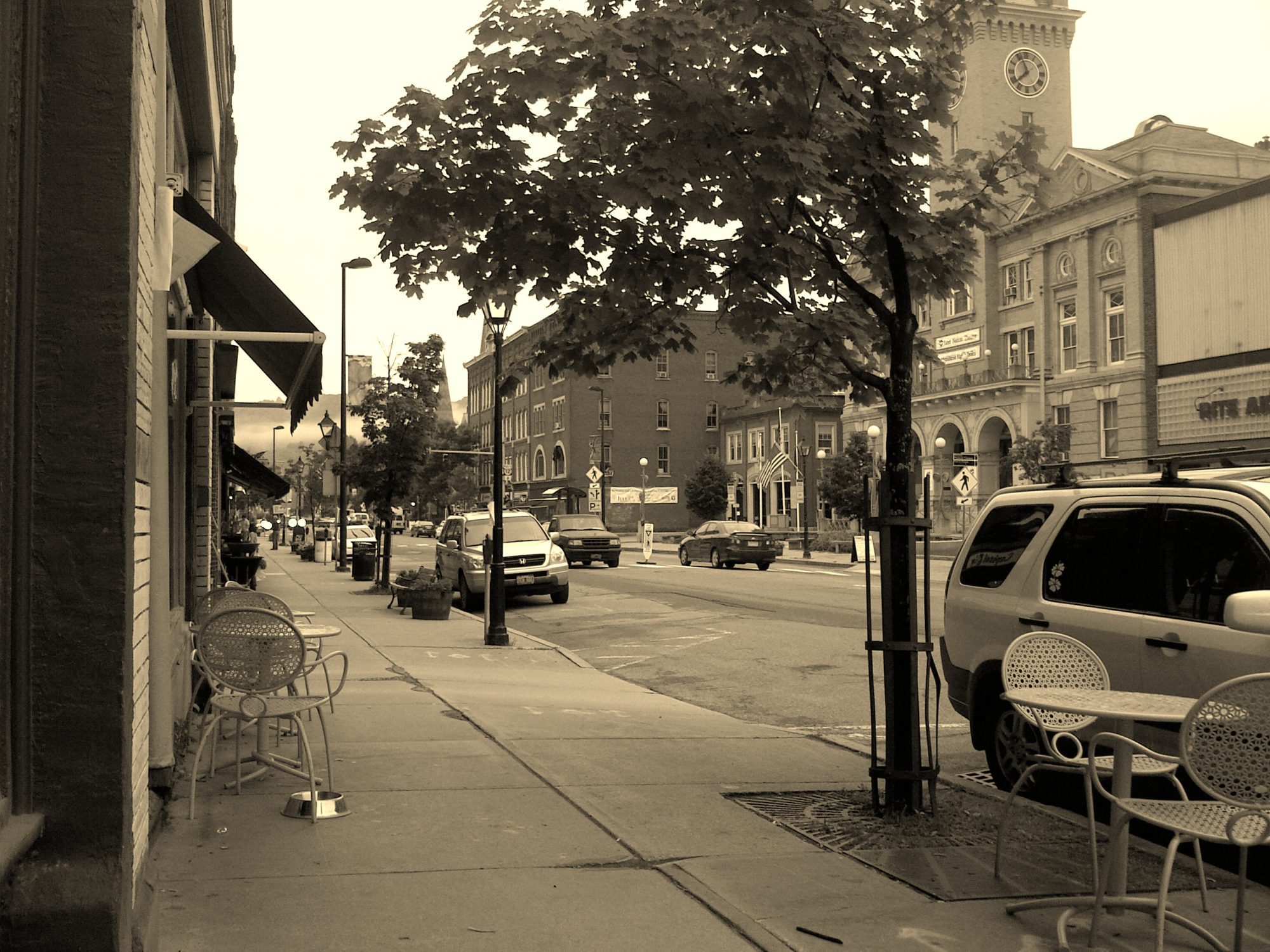

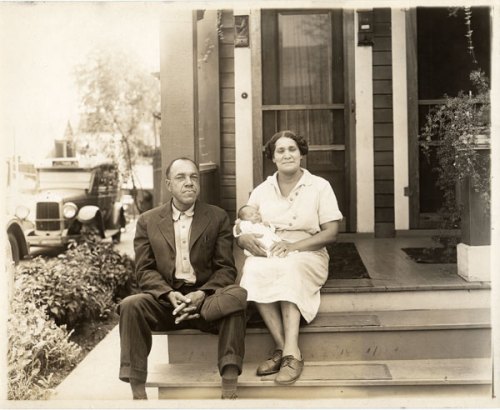
“Negroes had it made in Detroit until World War II. We had everything we needed in the Black community. Discrimination gave us tremendous [economic] power because we had been compacted in one small area.” -Sidney Barthwell
“This was no slum, this was an area which people lived in. Today, you would call it middle class.” -Charlie Primas
The Riots of ‘43
The riots of 1943 had been forewarned by many who saw the dangerous mixture of race, housing, and unemployment as a harbinger of what was to come. “The Negro factor in Detroit is a keg of powder with a short fuse and any one of many possible incidents, fairly insignificant in themselves, may be the match put to the fuse,” warned Detroit News reporter, A. M. Smith. Detroit leaders, city officials, and industrialists scurried for answers and analysis to “the Negro Problem.” Some blamed idleness, due to lack of employment, in young Black youth as the source of the problem. Charles C. Diggs “says we shall never make the proper approach to the Negro problem here or anywhere else in the North until we take fully into account the basically different social and economic systems of the North and the South; make proper allowances in recognition of this difference, and set up proper aids to the Negro in making the change.” Former Detroit Urban League official John C. Dancy placed the blame on local unions, and industry management. For example, “the AFL Machinist Union will not admit Negroes to membership.” On the other hand, Dancy criticized the management for their passive role in discrimination against Black workers:
“But I still feel that the greater responsibility in this is on the management of industrial plants. If they would take a firm position with reference to hiring Negroes, and let it be known throughout their plants that no prejudice on the part of White workers would be tolerated, the situation would quickly calm down.
For William J. Norton, executive vice president of the Children’s Fund of Michigan and chairman of Mayor Jeffries Inter-racial Committee, the problem was segregation and lack of jobs. “There is strong feeling on the part of Negroes of Detroit on these two counts, and the feeling is growing in intensity.”
On June 10th, almost a week and a half before the riots occurred, Henry N. Johnson, president of the Detroit Real 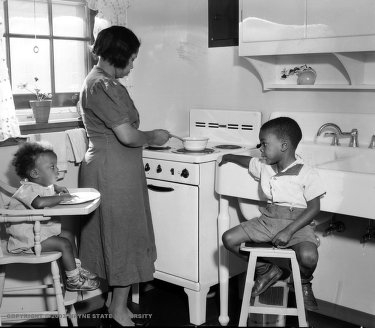 Estate Board, speaking to the issue of inadequate housing, and the slum conditions in which Black Bottom residents lived, told mortgage bankers that Black Bottom residents should be given “the same opportunity to establish homes as the city’s White population, with equal police protection, adequate schools, recreation facilities, garbage collection and other services, Detroit’s Negroes…would quickly take advantage of it.”
In John A. Williams 1968 article, The Long Hot Summers of Yesteryear,” he notes that urban race riots in America are not unique, and that White violence against Blacks “seem to have occurred most often as a response to prevailing patterns of White social, economic, and political supremacy” (as seen with the Brewster and Sojourner Truth incidents, for example).
According to Dominic J. Capeci, Jr. and Martha Wilkerson‘s Layered Violence: The Detroit Rioters of 1943, the riot resulted from Black rage, paranoia, innate criminality, and idleness. In other words, young, Black, “antisocial” and “aggressive” male roustabouts, whom had nothing else better to do with their time and energy, accused White sailors of throwing “a colored lady and her baby” over the rails of the Belle Isle bridge. This act precipitated the riot. Capeci and Wilkerson wrote that Charles “Little Willie” L., a “5 feet 4 inches…140 pound…dark skinned…criminal” 20 year old with “limited education and marked racial feelings,” along with Leo T. incited and instigated a day-long riot that ended the next day when 4,000 army troops were sent under martial law into the city. 35 people lay dead, 530 injured and 1300 arrested. Twenty Blacks were given 90-day jail terms for disturbing the peace. No Whites were convicted of any wrong-doing.
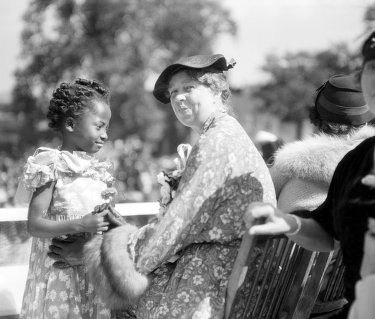 Perhaps the real reason for the riots lay in the timeless issue of inadequate housing, and the horrible effects of substandard, crowded conditions had on Black Bottom residents. Because of the crowded and poorly ventilated housing in Black Bottom, communicable diseases especially pneumonia and tuberculosis proliferated, and Black workers suffered disproportionately compared to Whites. In 1920, pneumonia killed Blacks three times more than did Whites in Detroit. By the early 1930s Detroit health statistics noted that over six times as many Blacks as Whites in the city contracted tuberculosis. Health Department investigators concluded that “about two-thirds of the pneumonia fatalities and one half of those from tuberculosis could have been avoided if crowded and unsanitary housing had been eliminated. Segregated housing patterns that boxed Black workers into limited areas of the city not only were blows to comfort, pride and family life; they could also kill.” The Ossian Sweet case, the Brewster and Sojourner housing projects, are examples of how Blacks attempt to expand into new areas were often met with White mob violence.
Almost a month after the riots, Black Bottom still bore the effects of the riots. Many merchants continued to try to put their businesses (and lives) back together, boarding up broken windows, and replacing the vast amounts of merchandise that had been looted during the riots. Exacerbating Black problems, Mayor Jeffries’ 1946 Detroit Plan targeted Black Bottom as the ideal site for so-called slum clearance. When the Detroit Plan was issued in its final form in 1951, 140,000 Blacks lived in Black Bottom. As expected, many middle-class Blacks rushed to move to the more prominent neighborhoods of La Salle Boulevard, Chicago Boulevard, Boston Edison, and Arden Park. Displacement from Black Bottom led many economically disadvantaged Blacks to take up residence around Twelfth Street, the former Jewish “second front” on the city’s northwest side–a section that never engendered the favorable climate of community known to former Black Bottom residents. Regardless, though, Black Bottom and Paradise Valley had begun to descend.
Urban Renewal
The death knell, it seems, was struck by urban renewal which transformed Black Bottom into Lafayette Park. As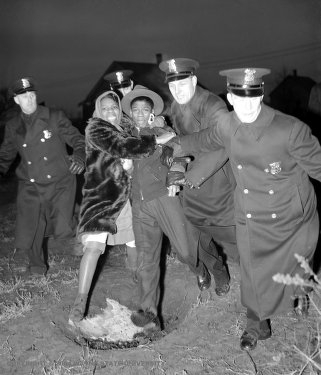 early as 1941 “the first concrete plan aiming at ultimate rehabilitation of the area within the Grand Boulevard circle was under consideration by Jeffries’ blight committee…The plan, embracing 20 square blocks bounded by Hastings, Dequindre and Larned streets and Monroe avenue” had sealed the fate of Black Bottom and Paradise Valley. The 1943 riots would only provide reason and logic for what was to come. The Chrysler Freeway took Hastings. Stroh’s took over St. Antoine. Hudson’s took Brush and Beaubien. It seemed like the Berlin Conference. Some say it was a White man’s conspiracy to break the power and solidity of the Black man’s community. Some residents jokingly called urban renewal “Negro removal.” And when one considers these claims, from an historical perspective, it is plausible. Many believe that possibly all of the above factored into the inevitable end of Black Bottom.
Noted sociologist and historian, Thomas Sugrue, analyzes the postwar dilemma as something that simply added to problematic issues already affronting the citizens of Black Bottom and Paradise Valley. In his monumental study, The Origins of The Urban Crisis, Sugrue lingers with an explanation of what the intentions of the Detroit Plan had been:
Compounding the housing woes of inner-city Blacks was the city’s extensive urban renewal program. The centerpiece of Detroit’s postwar master plan was the clearance of ‘blighted areas’ in the inner city for the construction of middle-class housing that it was believed would revitalize the urban economy. Like most postwar cities, Detroit had high hopes for slum removal. City officials expected that the eradication of ‘blight’would increase city tax revenue, revitalize the decaying urban core, and improve the living conditions of the poorest slum dwellers. Overcrowded, unsanitary, and dilapidated districts like Paradise Valley and the Lower East Side would be replaced by clean, modern, high-rise housing projects, civic institutions, and hospitals. Four of the city’s most important redevelopment projects–the Gratiot Redevelopment Site, the Brewster and Douglass public housing projects, and the Medical Center Area–were promised on the destruction of some of the most densely populated Black neighborhoods in the city.
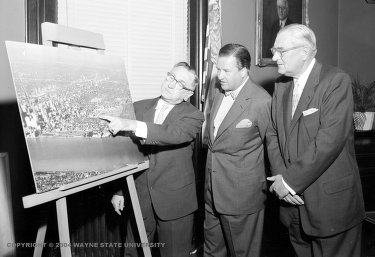 In reality, Mayor Edward Jeffries and the Detroit City Plan Commission in 1946 had destroyed a community. Black Bottom and Paradise Valley were devastated by highway construction. The Oakland-Hastings (later Chrysler) Freeway barreled through these former Black enclaves. The Hastings Street commercial district in Paradise Valley felled many of Detroit’s most prominent Black institutions, from jazz clubs to the St. Antoine branch of the YMCA. The John C. Lodge Freeway ripped through the increasingly Black area around Twelfth Street, and Highland Park. It seemed as though a crime had been committed.
The aftermath was not much more than a “‘no man’s land’ of deterioration and abandonment.” Actual construction had been delayed and for 10 years after Jeffries Detroit Plan, Black Bottom lay dormant and the city did nothing to help business owners or Black residents to relocate. Shopkeepers had no real reason to invest in improvements, as condemned buildings were buried under asphalt and cement. While statistics show that, by 1950, 423 residences, 109 businesses, 22 manufacturing plants, and 93 vacant lots had been condemned for the first three-mile stretch of the Lodge Freeway from Jefferson to Pallister, the Michigan Chronicle’s 1951 front page story, “Progress Has Been Rapid for Negroes in Motor City,” seemed propagandist, at best. By 1958, the Lodge Freeway displaced 2,222 buildings. Destruction continued to make way for the Edsel Ford Expressway with the demolition of approximately more 2,800 buildings. While some of the displaced residents were White homeowners, Black renters suffered the brunt of such, since, unlike the majority of the White homeowners whom were successfully relocated, they were left out in the cold.
Eventually, homes and businesses were replaced with apartments and townhouses such as those in Lafayette 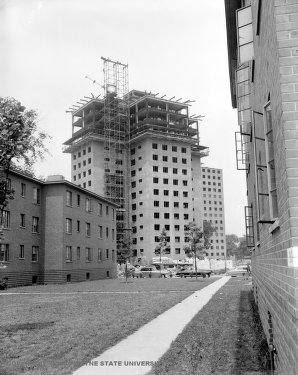 Park, which many of the former residents couldn’t afford. Hastings Street became Chrysler Freeway. The rise of new office buildings, the development of a large network of expressways whimsically cut through what was once a testament of Black socio-economic success. B. J. Widick thought this fleecing of the Black community to be “an aura of prosperity,” while those folk whom were suffering the sting of displacement and obstruction saw it differently: “I [did] not have money to rent a $75.00 house [with] no heat,” exclaimed Maud W. Cain, a widow forced to move out of her one-room apartment on in Black Bottom. Harvey Royal shared Cain’s pain and frustration at the senselessness of moving residents from their homes, for the purpose of highway construction: “I think it would have been so much nicer to have built places for people to live in than a highway and just put people in the street.” Paradise Valley was obliterated, but the Black ghetto simply moved to the Twelfth Street area, forgotten until it became the center of the 1967 riot. Twelfth Street had been the Jewish area; the Jews were now living in Huntington Woods, Southfield, and other suburbs. Middle-class Blacks moved to the more prominent neighborhoods of La Salle Boulevard, Chicago Boulevard, Boston-Edison, and Arden Park. Black Bottom was gone. Paradise Valley was gone.
Epilogue
Former Black Bottom resident M. Kelly Fritz, during an interview with Historian Elaine Moon Latzman provided an interesting perspective on Black Bottom’s fate. “I think World War II was the greatest setback to Negro relations in general. I think that one of the mistakes that Black people made was when they thought they had integration, they gave up their own institutions. I think every ethnic group needs a place where they can get together to discuss things that are peculiar to their problems.”
Perhaps Black Bottom had served its purpose. Black Bottom evolved out of segregation and housing discrimination. Legal “Deed Restrictions” prevented Black folk from living amidst reluctant Whites, and automatically transferred Blacks to the area previously occupied by Greek, Italian, and Polish immigrants. As a matter of course, these groups eventually moved to establish communities away from Black Bottom, leaving Blacks to shape and mold their meager existence into a vibrant and self-sustaining community. With the help of the DUL, Black southerners migrated to Black Bottom and made a life for themselves and their family. The DUL forged alliances with other White and Black institutions to help transform Black Bottom into a decent community.
By the late 1950’s, desegregation offered Blacks the opportunity to spend their money at White businesses.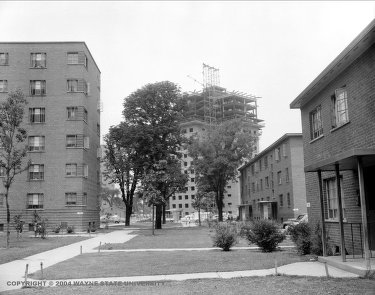 Hastings Street, once a thriving and often crowded thoroughfare of Black-owned business, clubs, etc., was nothing more than rubble, dismay, and memories. The poor Black folk living in Black Bottom could not afford to protest against urban renewal. And the ones who did have the wealth, clout and might to wage war against the machines of such urban disruption, packed their bags and headed to even loftier retreats, neighborhoods, and getaways. For instance, Sunnie Wilson headed to Idle Wild, and in September of 1962, the rich, famous, and well-to-do Black elites gathered at the Gotham Hotel for a farewell party for John White.
The destruction of the Gotham surely symbolized the end of an era. As the Gotham fell, as did many other landmarks in Black Bottom and Paradise Valley, city officials continued to turn former Black homes and businesses into vacant lots. Black folk were devastated…some were left homeless. The rest were sent scurrying in the direction of Twelfth Street. Some would say that stringent racism and segregation made Black Bottom and Paradise Valley, and integration destroyed it. Sunnie Wilson believes that, just like other cities around the country that sought to rid themselves of run-down Black neighborhoods, the takeover of Paradise Valley could not be stopped. That’s been the White man’s philosophy – to move in, move the people out, and let the property sit vacant.
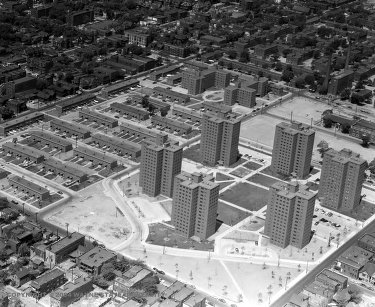 Whether this is true or not, the tight-knit community – Black Bottom – that once boasted the grand example of human will, courage, endurance, and strength – under constant pressure – is gone. The most efficient Black prominent social and cultural Mecca that Black folk could ever claim with a real sense of pride and joy – Paradise Valley – is gone.
Works Cited: Capeci, Jr., Dominic J. and Martha Wilkerson. Layered Violence: The Detroit Rioters of 1943. University Press of Mississippi, 1991; Latzman, Elaine Moon. Untold Tales, Unsung Heroes: An Oral History of Detroit’s African American Community, 1918-1967. Detroit: Wayne State UniversityPress, 1994; Moore, Peggy A. Paradise Valley Days: A Photo Album Poetry Book of Black Detroit, 1930’s to 1950’s. Detroit; Detroit Black Writer’s Guild, Inc., 1998; Sugrue, Thomas. The Origins Of The Urban Crisis. Princeton, New Jersey: Princeton University Press, 1996; Widick, B. J. Detroit: City of Race and Class Violence. Chicago: Quadrangle Books, 1972; Wilson, Sunnie and John Cohassey. Toast of The Town: The Life and Times of Sunnie Wilson. Detroit: Wayne State University Press, 1998; Joyce Shaw Peterson, “Black Automobile Workers in Detroit, 1910-1930, The Journal of Negro History, Vol. 64 (1979): 183; John A. Williams, “The Long Hot Summers of Yesteryear,” The History Teacher 1, no. 3 (1968): 10; The Detroit News, Jan. 24, 1941. p. 1-2; The Detroit News, June 11, 1943, p. 21; The Detroit News, June 22, 1943, p. 2; The Detroit News, October 5, 1942, p. 1; The Detroit News, October 6, 1942, p. 11; The Detroit News, October 8, 1942, p. 1; The Michigan Chronicle, July 14, 1952, p. 1; The Detroit Tribune, Saturday, July 10, 1943. p. 1. Photos courtesy of Wayne State University-Walter Reuther Labor Library, University of Michigan-Bently Historical Collections, Burton Historical Collection
*Book available October 26, 2009 at all local retail outlets on online locations*


Добавлю в закладки, интеретсно читать
LikeLike
Mr. Williams,
I found your site today and will be reading your book on Black Bottom as soon as I can get it, and I thank you for writing it. I hope that you will like my blog and will add it to your blogroll; I will add yours to mine. I write – mostly about Detroit and it’s music.
The homepage:
The feature article, about my father and his record shop on Hastings:
/http://marshamusic.wordpress.com/page-joe-von-battle-requiem-for-a-record-shop-man/
I am working on a book about growing up at the shop, during the era of the last years of Hastings and 12th streets in Detroit. I have just completed an extended magazine article on the destruction of Black Bottom and the rise of Lafayette Park, awaiting publication.
I hope to hear from you.
Marsha Cusic/aka Marsha Music
marshamusic.wordpress.com
LikeLike
Where can I find “The Life and Times of Sunnie Wilson, Detroit;” Wayne State University Press 1998 ?
LikeLike
Wayne State University David Adamany Library
LikeLike
btw, are you in relation to the late Chester Rentie? Any relation to Marla Gibbs?
LikeLike
My name is Shaun E. Rentie and I am related to Chester A. Rentie, Frieda Rentie, and Marla Gibbs you can reach me @ 313 288 5801
LikeLike
I really loved reading your blog. It was very well authored and easy to undertand. Unlike additional blogs I have read which are really not tht good. I also found your entries very interesting. In fact after reading, I had to go show it to my friend and he ejoyed it as well!
LikeLike